Pre-hab or Rehab

I feel like those are my choices–rehab, if not now, then certainly down the road.  I’d rather do prevention–“pre-hab”.

Although I am not inherently interested in exercise, (I have other things I want to do more than exercise, like make art), I am beginning to enjoy it and feel rewarded. I have been part of the exercise study for about 4 weeks now, and I am noticing some changes–a smaller tummy and my batwings are almost gone.  I feel ten years younger.

In the months before this exercise program, I had gained almost 10 pounds following my mom’s death in January.  I was down, feeling old and even my husband now says my skin was looking grey.  I was becoming resigned to old age and deteriorating. I would not have started this exercise program, if I wasn’t motivated by the chance to improve my osteoporosis.

I started working out in late June.  It’s now early August, and I feel so great.  I have more energy, I sleep better and I feel like I look better. In addition to the knee exercises prescribed by Dr. Stokes I am doing strength exercises for my entire body.  I have arrived at a system of doing lower body one day alternating with upper body the next. That keeps the length of the workout session manageable.

Keep me in your thoughts, and fingers crossed please!  I want to reverse this osteoporosis through exercise.
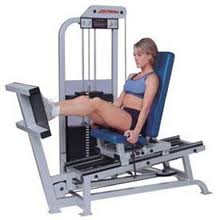
The exercises for the bone study

Leg press

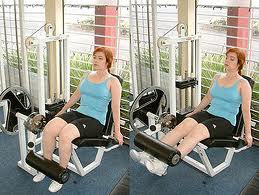
Leg extension

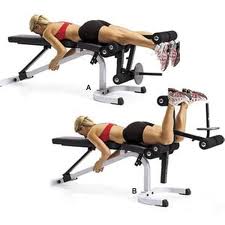
Leg curl

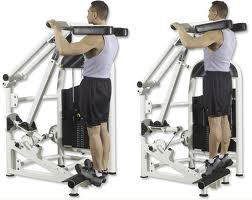
Calf raise

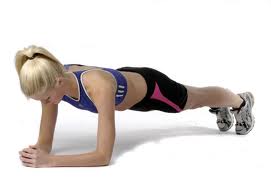
Plank exercise

I complete 4 sets of each exercise, each set consisting of 15 reps, (or as many as I can do) with a one minute rest between sets. The first set is an easy, low weight, just to warm up the muscles.  I add more weight with each subsequent set to stress the bone.

Can exercise reverse osteoporosis?

Dr. Gregory Chang

Dr. Wayne Stokes

Dr. Gregory Chang, Assistant Professor of Radiology and Dr. Wayne Stokes, Head of Sports Medicine Rehabilitation at NYU Langone Medical Center in New York are using the amazing 7T MRI Scanning technology to study whether or not exercise can reverse osteoporosis.

The doctors gave me initial 7T scans of bones around the knee and an exercise protocol.  I am performing five weight bearing exercises 3-4 times per week.  After three months of the weight lifting protocol, the doctors will scan my bones again to see if there is improvement in bone density.  I am working very hard on the exercises.  Keep your fingers crossed!

Unsung hero of medical technology–Hugo Chang

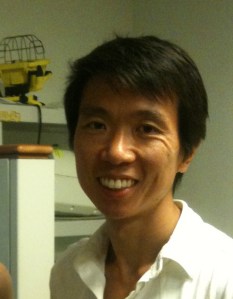
Hugo Chang, the engineer responsible for the installation and maintenance of the 7 T MRI Machine.

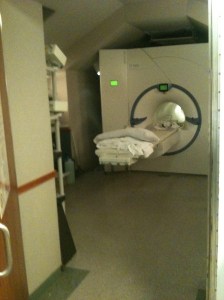
7TMRI

Looks like any MRI scanner, right?  Not so.

About the 7T MRI Scanner, to quote the manufacturer, Siemens:

“7T MRI now emerges as the equipment of the elite, the new research and development frontier, the system of the pioneers. 7T MRI provides the potential for microscopic spatial resolution visualizing anatomy previously unseen. In addition, it enables the observation and analysis of tissue metabolism and function. 7T MRI is a great instrument for the research and development of molecular imaging methods, promising a whole new world of applications….

*This system is a research tool and is intended for investigational use only. This information is preliminary. The system is under development and not commercially available in the U.S., and its future availability cannot be ensured.”

And Hugo Chang is the man who makes it work.  He jokingly told me “It’s my toy.  Other people play with Legos.  I play with this.” Imagine the stress of being the person responsible for installing and maintaining a $7 million dollar machine that is so new, even the makers couldn’t know what might go wrong in the field.  And imagine the mind of a man who can maintain this thing. That’s Hugo Chang.

The future of MRI technology

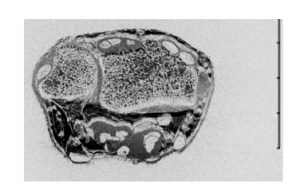
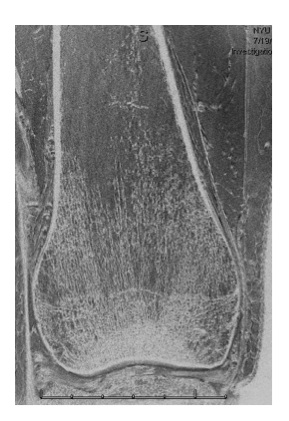
Photo credits for these images go to Gregory Chang, M.D., Assistant Professor in the Musculoskeletal Imaging Division, Department of Radiology at the NYU Langone Medical Center for Biomedical Imaging.  Dr Chang is using the technology to study osteoporosis.  I am especially excited about being part of his research using 7T MRI imagery to study the the effects of weight lifting on osteoporosis.

The “camera” is the7T Siemens MRI.  In case you would like to buy one of these 7 million dollar machines, I am including a link to their website below. There are very few 7T’s in the world.  Apparently the level of detail shown in these images could previously be gained only through an autopsy.

What’s it like to get a 7T MRI? Very Noisy.  It is loud, much louder than a typical MRI machine.  But it’s worth it.  Just look at the images!

http://www.medical.siemens.com/webapp/wcs/stores/servlet/PSGenericDisplay~q_catalogId~e_-11~a_langId~e_-11~a_pageId~e_68112~a_storeId~e_10001.htm